
To mark Heat Action Day on 11 June 2026, held under the theme “Preparing together for extreme heat”, the consumer protection association Wohnen im Eigentum (WiE) explains how heat-protection measures can be implemented in existing buildings and what flat owners need to consider. In almost every case, the condominium owners’ association (WEG) must pass a resolution approving the measure.
Windows and balcony or patio doors play a major role in protecting a home from summer heat because their glass panes convert sunlight into heat radiation, which then warms the living space. External roller shutters or external venetian blinds therefore provide the most effective protection. They slow the entry of heat into the building.
Solar-control films applied to the outside of windows are an inexpensive measure. Depending on the degree of tint, however, these films can darken rooms and should therefore be removed again in autumn. When selecting a film, flat owners should also ensure that it does not create a mirror effect that could disturb neighbours.
Flat owners must always obtain the consent of their co-owners if they wish to fit shutters, external venetian blinds or external roller shutters to “their” windows. The co-owners must approve the proposed measure by a simple majority because a flat’s external windows belong to the condominium owners’ association. They are mandatorily common property, even if the declaration of division states otherwise.
Owners should first consult their declaration of division, however. It may contain a provision permitting the installation of shutters, external venetian blinds and external roller shutters. Alternatively, there may already be a general resolution that was adopted previously and permits these measures. In that case, a new resolution is not required. For external films, the following applies: if they impair the visual appearance of the façade, the WEG is entitled to require their removal.
Internal sun protection is less effective
If external solutions are not possible or desired, internal sun protection on windows in the form of pleated blinds, internal roller blinds or vertical blinds can also help. These are less effective, however, because they still allow the heat radiation to enter the room.
If an internal sun-protection solution requires alterations to windows or window frames, for example by drilling into them, flat owners must first submit a proposed resolution to the owners’ meeting and obtain permission from the other owners. A simple majority of the votes cast is required. The association will generally have to approve such a measure because it is not expected to adversely affect the WEG. If a general resolution already exists, a new resolution is unnecessary. No resolution is needed if pleated blinds, internal roller blinds or vertical blinds can be fitted without altering the window.
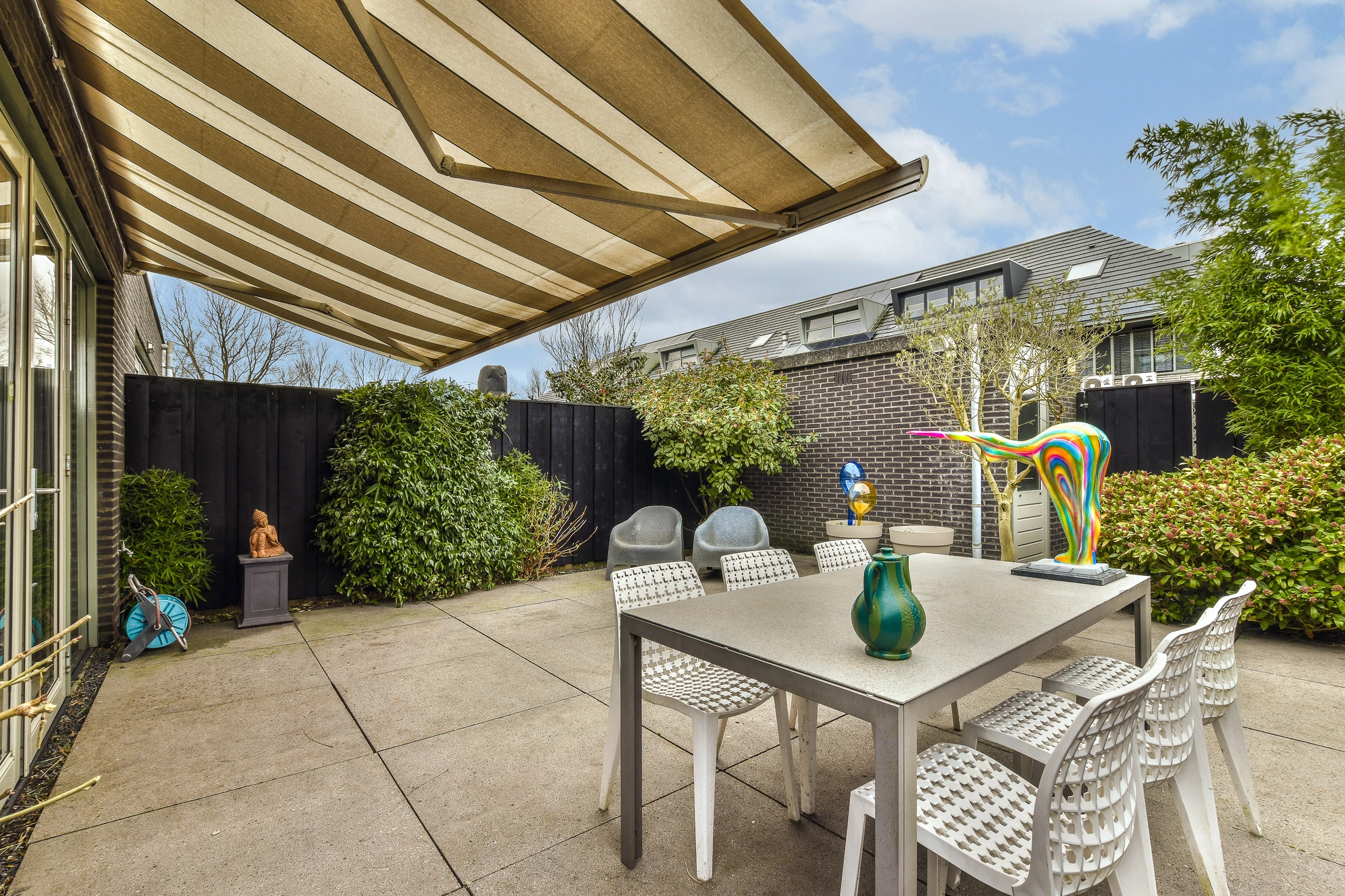
An awning for a balcony or patio
Awnings, which are now available in many different designs and are attached to the façade, are suitable for shading balconies and patios, particularly on the south and west sides of a building.
Flat owners who would like an awning must submit a proposed resolution to the owners’ meeting. As the façade is common property, the WEG must approve the structural alteration by a simple majority.
Installing an air-conditioning unit
Split air-conditioning units are permanently installed and consist of two parts: one part is fitted inside a living space and the other, the compressor, is fitted outside on the residential building’s façade. Anyone considering such a unit should make sure they find out about its electricity consumption beforehand and keep the electricity costs in mind.
As fixed air-conditioning units are generally mounted on the façade, the same rules apply as for an awning: a proposed resolution must be submitted to the owners’ meeting and the WEG must approve it by a simple majority. If the flat owners permit a co-owner to make a structural alteration, that resolution can be declared invalid following a challenge only under certain conditions. Mere concern about possible future noise from an air-conditioning unit is insufficient, for example, as Germany’s Federal Court of Justice (BGH) ruled last year. The BGH also made clear that if operation of the unit does subsequently prove to cause a nuisance, restrictions on its use or even the cessation of its operation can be demanded.
Green roofs and façades
A green façade provides natural protection against summer heat and at the same time helps reduce heat loss in winter. This can have a positive effect on owners’ energy costs because the need for air conditioning and heating may fall. The vegetation also protects the property from extreme weather.
WEGs planning a green façade should seek expert advice at an early stage. Particular consideration should be given to the conditions at the location and the subsequent maintenance required. Suitable plants range from Virginia creeper, wisteria, climbing roses and clematis to espalier fruit trees. Caution is needed with ivy, for example, as it can cause considerable damage to a façade in some circumstances.
A green roof also requires expert advice and professional planning. The structural load-bearing capacity should be checked at the outset, as not every building is able to support the additional weight of vegetation. A root-resistant roof seal is another essential prerequisite.
Both green façades and green roofs constitute structural alterations to common property. As both are fairly complex projects affecting central parts of the building, they will generally be implemented collectively by the WEG rather than by individual owners. A simple majority of the votes cast is sufficient to pass a resolution. When allocating the costs, however, it must be remembered that all owners are required to bear them only if the resolution is adopted by a double-qualified majority, according to Wohnen im Eigentum.
Funding for certain measures
Homeowners and flat owners can receive government funding for certain heat-protection measures. The Federal Funding for Efficient Buildings – Individual Measures programme (BEG EM) supports not only energy-efficiency renovations such as replacing windows or insulating roofs, but also external sun-protection devices, including venetian blinds, external venetian blinds, roller shutters and shutters. Green roofs and façades are eligible measures as well. Some local authorities also provide funding for them.
As an alternative to government funding, owners can deduct the cost of energy-efficiency renovations from their tax liability under certain conditions. Among other requirements, they must occupy the property themselves and it must be at least 10 years old.