
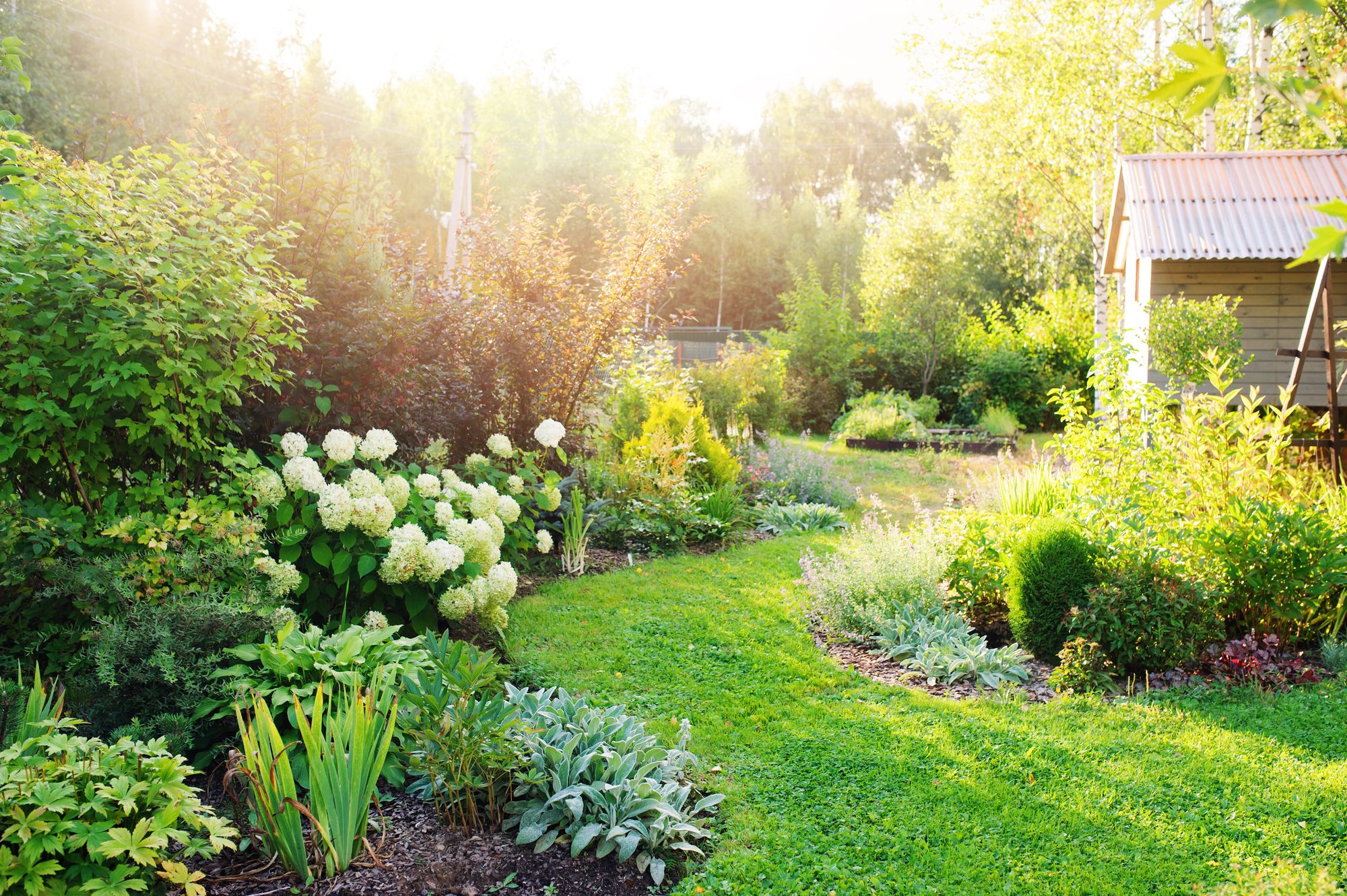
Climate change is presenting amateur gardeners with new challenges too. Many are wondering which plants are suitable in view of increasingly frequent periods of heat and drought, and how they can maintain their gardens with the least possible impact on the climate. Erich Kulling, a member of the German consumer protection association Wohnen im Eigentum (WiE), offers 10 tips. He is a garden architecture and landscape management engineer.
For around 30 years, Erich Kulling has been responsible for maintaining green spaces and caring for trees at the Parks Department in Worms. His work there also covers plant selection and care, and how these need to be adapted to new climatic conditions.
Tip 1: Prepare the soil properly
Soil is the foundation for healthy, thriving plants. “When plants fail to grow well, this is usually due not to climate change, but to poor soil conditions, inadequate soil preparation and insufficient space for the roots,” Erich Kulling explains. He says this problem often affects the outdoor areas of blocks of flats, as the ground around the buildings is generally heavily compacted and construction rubble or other “surprises” are often found below the surface. “There is usually too little organic matter in the top layer of soil, or the topsoil is missing entirely,” says Kulling.
The soil should be loose and able to support roots to a depth of at least two spade blades, or 60 cm. This applies to perennials, ground cover and shrubs. For trees to grow satisfactorily, the soil must be loosened to a depth of at least one and a half metres before planting.
Tip 2: Plant a diverse range suited to the location
As a general rule, it is important to choose a diverse range and select plants for the particular location, such as full sun. There are plenty of attractive plants suited even to difficult sites such as dry shade, including barrenwort, wood asters and gromwell. Perennial nurseries and tree nurseries will be happy to offer advice.
Tip 3: Take frost hardiness into account
With periods of heat and drought becoming more frequent, plants need to be both heat- and drought-resistant as well as frost-hardy. Even though German winters are becoming milder on average, cold snaps can still occur. When choosing plants, therefore, find out exactly which ones combine these qualities. Many plants from the Mediterranean region, for example, are not sufficiently frost-hardy to be planted outdoors all year round in Germany. Suitable examples include tall stonecrop, eryngo, calamint and Russian sage.
Tip 4: Choose drought-resistant plants
Anyone replanting or creating a garden who does not live in an area with plentiful rainfall and acidic soil would be better avoiding species such as rhododendrons and hydrangeas, as these plants require a great deal of water. There are alternatives, however: tree peonies need almost no additional watering and tolerate full sun. In soil with a high lime content, common lilac and royal lilac, with their purple, pink and white flowers, are good choices.
Also:
There are attractive native shrubs that tolerate severe drought and are easy to care for, including wayfaring tree, hawthorn, Cornelian cherry, burnet rose and hazel.
Classic garden shrubs that tolerate drought and are easy to care for include serviceberry, various species of barberry, beauty bush and Chinese golden rose.
Perennials and subshrubs for sunny, dry locations include lavender, steppe sage, catmint, Jerusalem sage, stonecrop, tall yarrow, cotton lavender and Mediterranean spurge. Bearded iris can cope with the most difficult locations – the sunnier and drier, the better. It is available in a wide variety of cultivars. These perennials combine beautifully with grasses such as Atlas fescue and silver spike grass.
Mediterranean herbs: these are, of course, essential for gardeners who also enjoy cooking. Rosemary, thyme and sage are classics. Less well known but still highly recommended and very easy to grow is hyssop, a 60 cm-tall subshrub available with either white or blue flowers. It is very good for seasoning salads, for example. All Mediterranean herbs can also be grown very successfully in terracotta pots on a balcony.
Tip 5: Plant trees – absolutely, but consider species and space requirements
Trees provide vital shade and are indispensable in garden design. Unfortunately, mistakes are repeatedly made at the planning and planting stages. A suitable site for a tree must provide at least twelve cubic metres of soil in which roots can grow. This corresponds roughly to the area of a car parking space and a depth of one and a half metres. Only then can the tree develop a root system large enough to supply its crown with water and nutrients.
Make sure you find out how large the tree species you want to plant will grow. You should also seek advice on which species are particularly resilient and cope well with drought and heat. Guidance can be found, for example, in the GALK street-tree list (German Conference of Parks Department Heads) or in the publication “Climate trees – which species can be planted in future?” by the Bavarian State Research Institute for Viticulture and Horticulture.
Tip 6: Do without a lawn or do not mow it too short
Lawns need a great deal of water to remain green and dense during dry summers. In view of climate change, many people no longer consider this appropriate. Anyone wishing to do without a lawn entirely can turn it into a meadow or, in smaller areas, replace it with ground-covering shrubs and perennials. The Association of German Perennial Gardeners offers a series of mixed perennial plantings for a wide range of locations, from “Silver Summer” for full sun to “Shade Glow” for shady sites. All these planting mixes have one thing in common: they are easy to care for, robust and nevertheless very attractive.
Anyone who still wants to sow a new lawn should use, for example, a dry-site landscaping lawn mixture with herbs (RSM 7.2.2). This mixture is also suitable for south-facing slopes.
One point is essential: during summer, make sure you do not mow the lawn shorter than four centimetres, as it will otherwise scorch more easily in strong sunlight.
Tip 7: Water correctly
Lawns, perennials and woody plants should be watered thoroughly at longer intervals, Erich Kulling recommends. Each watering should provide 15 to 25 litres per square metre. Do not water again for another two weeks. (Please note: summer flowers and vegetables need to be watered more frequently.) This encourages plants to grow deeper roots and enables them to withstand dry periods better. If a sprinkler is used, a simple rain gauge, available from garden centres, helps to monitor the volume of water.
Use rainwater for watering where possible. You can collect it in a simple water butt or have an underground cistern installed to collect water from the roof.
Tip 8: Mulch to prevent drying out
Bark mulch in beds helps reduce evaporation and protects the soil from drying out. The mulch layer should be 5–7 cm thick. Humus from your own compost heap also helps increase the soil’s water-storage capacity.
Tip 9: Avoid bare soil – extensive planting prevents erosion
Planting across an entire area effectively protects the soil from drying out and from erosion during heavy rain. If beds are fully planted with perennials, such as Balkan cranesbill, barrenwort and creeping comfrey, the maintenance required is reduced considerably. Shrubs such as evergreen cotoneaster and dwarf privet are also very suitable for planting across larger areas at low cost.
Tip 10: Weed-control fabric and gravel get the red card
Unfortunately, it is currently very common to lay weed-control fabric over large areas and cover it with bark mulch, gravel or crushed stone instead of creating attractive planting. These “fake areas” have nothing to do with professional and creative garden design. Nor do they contribute to protecting species or the climate.