
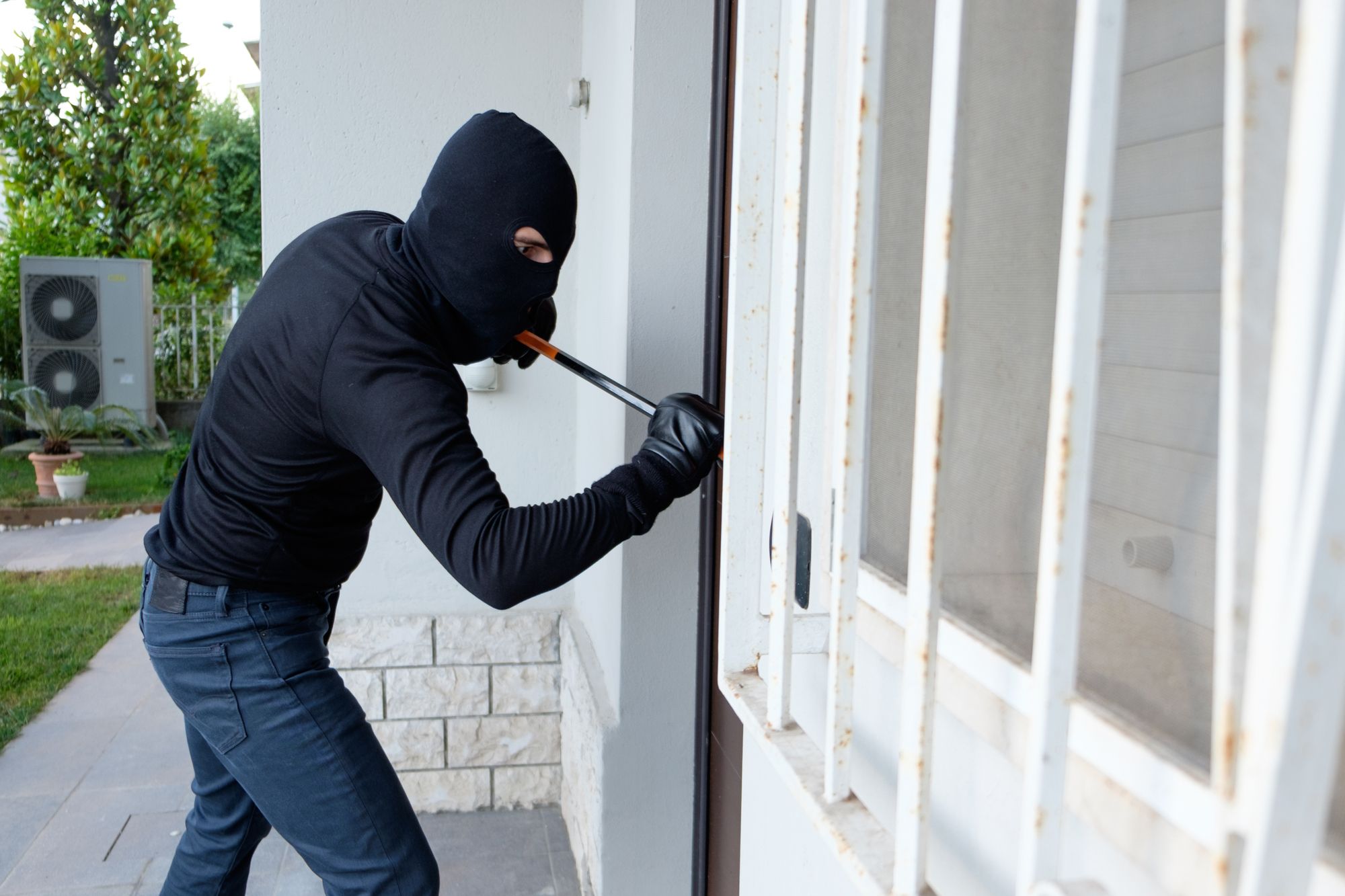
Protecting one’s home against burglary and theft is often of fundamental importance to owners and tenants. Effective protection requires not only suitable technical equipment, but also legal certainty. Following the reform of the German Condominium Act (WEG) and changes to tenancy law, the legal options for implementing effective protective measures are more practical, and recent case law has clarified them further. Annett Engel-Lindner of the German Property Federation IVD explains the specific issues involved.
Condominium and tenancy law: burglary protection is privileged
Condominium owners’ associations
Structural alterations can be approved by majority resolution or permitted for individual owners. An individual owner has a right to so-called privileged measures such as burglary protection; in principle, the owner requesting them bears the cost. Germany’s Federal Court of Justice made clear on 9 February 2024 that privileged structural alterations are generally reasonable and may be refused only where they cause atypical, substantial disadvantages.
Rental properties
Tenants can require their landlord to consent to reasonable structural alterations for burglary protection. This does not, however, automatically require the landlord to bear the cost.
Current situation: high case numbers and increasing losses
According to the latest Police Crime Statistics (PKS), 78,436 domestic burglaries, including attempts, were recorded across Germany in 2024 (2023: 77,819). There were also 107,861 thefts from basements, loft spaces and laundry rooms. Around half of all offences remained attempts. The German Insurance Association (GDV) puts insured losses in 2024 at around 350 million euros, with average losses of approximately 3,800 euros per burglary.
Engel-Lindner emphasises: “Both tenants and owners benefit from suitable countermeasures. Tenants and owner-occupiers gain security, while landlords protect their residents and increase the value of their property at the same time.”
IVD service: seven tips for effective protection
-
Design video surveillance in compliance with the law
Video surveillance is legally contentious as soon as it records a communal corridor, neighbouring areas or public space.
- – Condominium association/block of flats – video in the doorbell panel: Germany’s Federal Court of Justice considers a solution permissible if the camera is activated only when the bell is pressed, transmits solely to the flat concerned, stops after a short period, such as no more than one minute, and cannot make continuous recordings.
- – Digital door viewer in a communal corridor: according to case law, this generally gives rise to claims for cessation or removal. The very sense of being monitored through the apparent recording of communal areas is impermissible. At the end of 2025, Hanover Local Court declared a resolution approving digital door viewers invalid, partly because the technical requirements could not be monitored and enforced.
-
Use lighting
Install outdoor lighting with motion sensors at entrances, on paths and driveways, and at rear entrances.
-
Check suspicious markings
Photograph and remove unfamiliar signs, and monitor the surrounding area; inform the police if there are specific grounds for suspicion.
-
Secure windows and doors
Do not leave windows tilted open. Mechanical retrofits, such as additional locks, mushroom-head locks and crossbars, increase resistance considerably.
-
Use roller shutters appropriately
Close them at night, but do not leave them permanently closed during the day. Timers or help from neighbours are useful when the occupants are away.
-
Sensors and alarm technology
Use contacts, sensors and alarm systems; clarify responsibilities and configure systems securely with updates, strong passwords, a separate IoT Wi-Fi network and data-minimising settings.
-
Secure weak points
Give particular protection to basement doors, side entrances and easily accessible areas, especially in view of the high number of thefts from ancillary rooms and attractive items such as e-bikes. Do not leave “climbing aids” such as ladders or furniture outdoors.
“Anyone who now plans burglary protection in compliance with the law and implements it consistently, by resolution in a condominium owners’ association or with consent in a tenancy, significantly reduces the risk and protects both residents and property value,” Engel-Lindner concludes.