
From district heating expansion to e-mobility: what policymakers should tackle in 2026
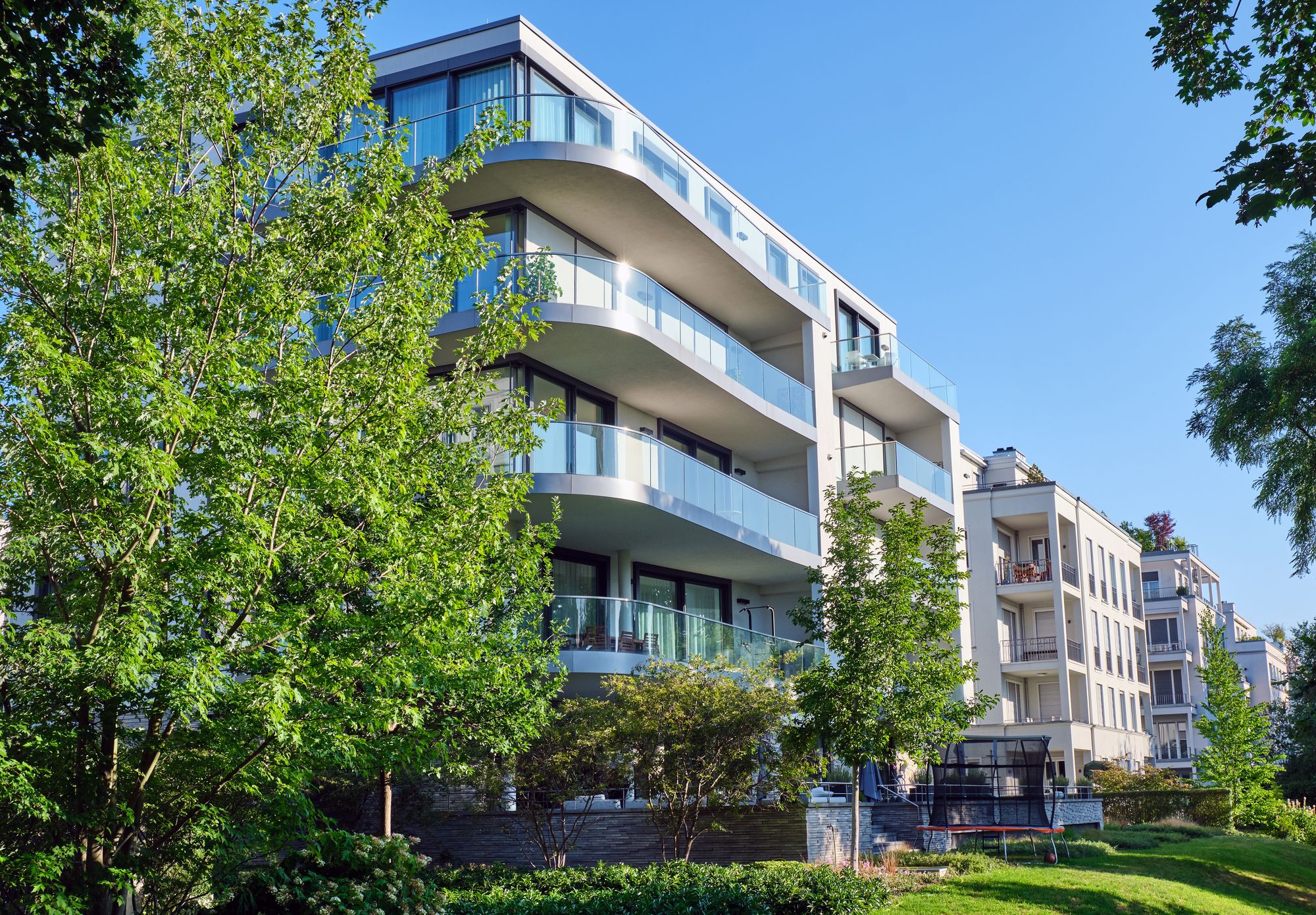
What has changed for condominium owners since the election of the new Bundestag in February 2025? At the time, the consumer association Wohnen im Eigentum (WiE) drew the parties’ attention to important issues through a series of election policy questions. Many planned measures that could improve the situation for property owners have so far been implemented only slowly. WiE outlines the topics that should receive particular attention in the new year.
From compulsory natural-hazard insurance to protection in the event of property developer insolvency, many political projects affect the interests of condominium owners and owners’ associations. The coalition agreement contains several measures that are progressing only slowly, while in some areas no action has yet been taken.
Expanding district heating: regulate prices and introduce central price supervision
According to the coalition agreement, the District Heating Ordinance was to be revised quickly. A draft amendment prepared by the previous government already existed, but the project was suspended because of the early election. No concrete proposal for new regulations has yet been presented. WiE sees a particular need for improvement in price regulation because prices vary considerably by region and district heating suppliers hold a monopoly position. Pricing must be transparent and stable, and a central price supervisory authority is still needed.
Compulsory natural-hazard insurance: opting out in an owners’ association only by unanimous decision
The coalition agreement envisages new rules for natural-hazard insurance. In view of increasingly frequent heavy rainfall and flood damage, WiE considers this long overdue. However, no concrete proposal is currently available. Dr Sandra von Möller, a member of WiE’s executive board, stresses that legislators must consider the needs of condominium owners. In WiE’s view, opting out of compulsory natural-hazard insurance should be possible only if the owners’ association agrees unanimously. Owners’ associations can decide on such insurance only collectively, by majority vote. An individual owner who is outvoted cannot insure the jointly owned parts of the building independently against natural hazards.
Protection against property developer insolvency: implement the proposals already prepared
WiE has long advocated stronger statutory protection for buyers when a property developer becomes insolvent. A working group appointed by the federal government developed concrete solutions as early as 2019, but no action has followed despite the growing number of problem cases. WiE is calling on the coalition to take up those proposals and finally establish effective consumer safeguards.
Building Energy Act: planning certainty and stable funding conditions
It remains to be seen what the recent renaming of the Building Energy Act as the Building Modernisation Act will mean in practical terms. The coalition’s room for manoeuvre is likely to be limited by European requirements. For owners, the central issue is an end to continuing uncertainty. They need reliable political conditions, especially owners’ associations whose decision-making processes naturally take longer.
Partial property sales: regulation and consumer information
Partial property sales are marketed particularly to older house and condominium owners. Owners sell up to 50 percent of their property to a provider in return for a one-off payment and continue to use it in exchange for a monthly fee. WiE warns that this model involves considerable legal and financial risks and is generally much less favourable than a comparable loan. The disadvantages often become apparent only when the entire property is sold later. WiE is calling for statutory regulation to protect consumers.
E-mobility: take the needs of owners’ associations into account
The Federal Ministry of Transport has announced a new funding programme for e-mobility in apartment buildings. WiE emphasises that the needs of owners’ associations must be considered. These associations can act only after passing the necessary resolutions, so application deadlines must be sufficiently long. Dedicated funding quotas may also be necessary to prevent funds from being exhausted before associations are able to apply.
Fibre-optic expansion: no compulsory connections or opaque provision charges
WiE generally welcomes the plans of the new Federal Ministry for Digital Transformation and Government Modernisation to accelerate fibre-optic expansion. However, a policy paper proposes giving telecommunications companies the right to install full fibre infrastructure throughout apartment buildings. WiE sees a risk of indirect compulsory connection and use, creating additional burdens for owners and tenants. The paper also proposes raising the fibre provision charge from EUR 540 to as much as EUR 960 per apartment. WiE considers this increase neither transparent nor objectively justified and is calling for a clear calculation and regular review of the charge.
Reliable political conditions and dependable funding
Owners’ associations need reliable political conditions, clear legal requirements and dependable funding that takes their particular needs into account. Around 9.3 million condominiums exist in Germany, representing more than one in five homes. Apartment buildings are an important form of housing for the future, especially in the context of the energy transition, and should therefore be high on the political agenda.