
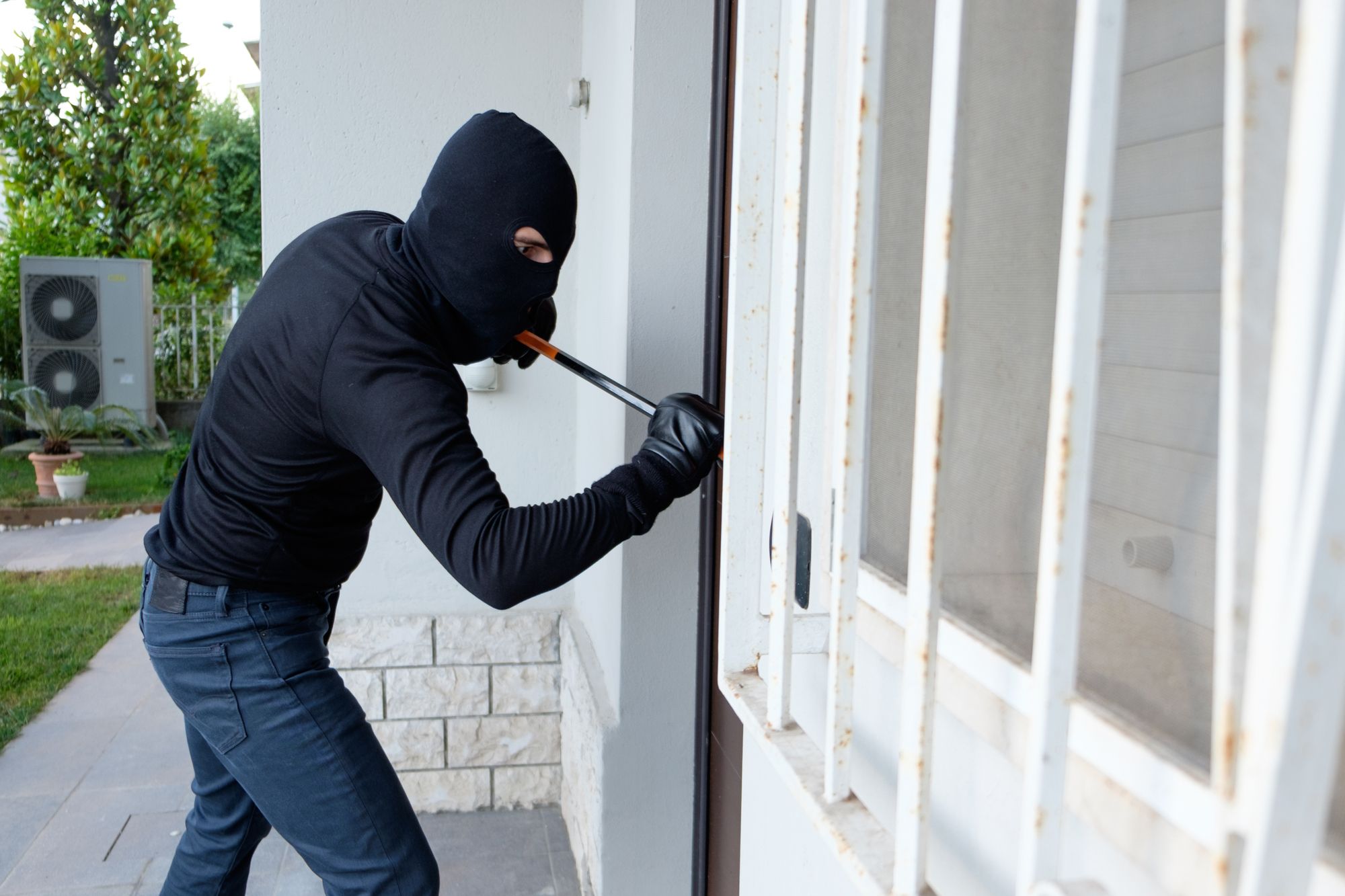
Structural alterations to protect flats in condominium owners’ associations against burglary always affect jointly owned property. Individual condominium owners may therefore not implement measures on their own, but must first obtain the consent of the condominium owners’ association (WEG) in the form of a permission resolution. The Wohnen im Eigentum (WiE) consumer protection association has drawn attention to this. WiE also explains which protective measures condominium owners’ associations should implement and finance collectively.
According to police crime statistics, 78,436 cases of residential burglary, including attempted burglaries, were recorded across Germany in 2024. Almost half of the burglaries failed. Burglary protection is therefore very important. According to experts, a combination of mechanical and electronic security measures is the most effective approach.
Windows are necessarily jointly owned property
Most burglaries take place through easily accessible and inadequately secured windows, or through balcony, patio and flat entrance doors. It therefore often makes sense to retrofit mechanical security or replace them with burglar-resistant windows or doors.
It is important to know that “windows, like balcony, patio and flat entrance doors, are necessarily jointly owned property, even if the declaration of division assigns them to individually owned property,” says Dr Sandra von Möller, a board member of Wohnen im Eigentum. “Condominium owners must therefore always obtain a resolution from their condominium owners’ association before making alterations to them.”
Individual condominium owners have a statutory entitlement
Under the German Condominium Act, condominium owners are entitled to “reasonable structural alterations” that provide protection against burglary, known as privileged measures. This means that WEGs must permit individual owners to carry out measures where these are “reasonable” and cannot simply reject them. This generally applies to retrofitting mechanical security to windows and doors, installing burglar-resistant windows and flat entrance doors, and fitting shutters or a door viewer.
The WEG has a say in the design and implementation
Condominium owners must first submit an application for permission to carry out the measure at the owners’ meeting. An important point in this context is that the WEG has a say in the design of the proposed structural alteration. The owners’ association may impose specific requirements and conditions on its design and implementation, but is not required to do so. “It is therefore generally advisable to make the proposed resolution as specific as possible and, where possible, to present quotations to the owners’ meeting at the same time,” recommends Dr Sandra von Möller. Applicants must bear the cost of the measure themselves.
Which measures WEGs should approve collectively
There are, however, burglary-protection measures that WEGs should approve in the collective interest because they affect all owners. Examples include installing a burglar-resistant main entrance door and basement door, an alarm system, an electronic door-release or intercom system, motion sensors and a video surveillance system.
Allocation of costs
These measures are often associated with high costs and sometimes consequential costs, which should be borne by all co-owners. “When the resolution is passed, a qualified majority, meaning more than two thirds of the votes and at least half of the co-ownership shares, must be achieved for the costs to be allocated to everyone; otherwise, only those owners who voted in favour have to pay,” explains WiE board member Dr Sandra von Möller. WEGs should always bear this in mind when they wish to pass a corresponding resolution.
Rules of use are important when installing video surveillance
If WEGs are planning a video surveillance system, they must consider several points in advance to ensure that the resolution complies with proper management. Surveillance may cover only the WEG’s communal areas, not third-party property, public paths or the individually owned property of particular owners. “The resolution must govern not only the technical installation, but also include rules of use specifying exactly how the system will be operated ,” explains Dr Sandra von Möller. In particular, this includes compliance with the General Data Protection Regulation (GDPR), as required by law.
This means that the resolution must specify which area will be monitored, for what purpose and during what period, how recordings will be stored, who may access them and when they will be deleted. It must also stipulate who is responsible for implementing the resolution – generally the management. This must be announced by means of a notice at the monitored location. It is also advisable to put up signs bearing camera symbols.
Is KfW funding available?
Before individual condominium owners or WEGs commission burglary-protection measures, they should find out about KfW funding opportunities and possible local-authority funding programmes.